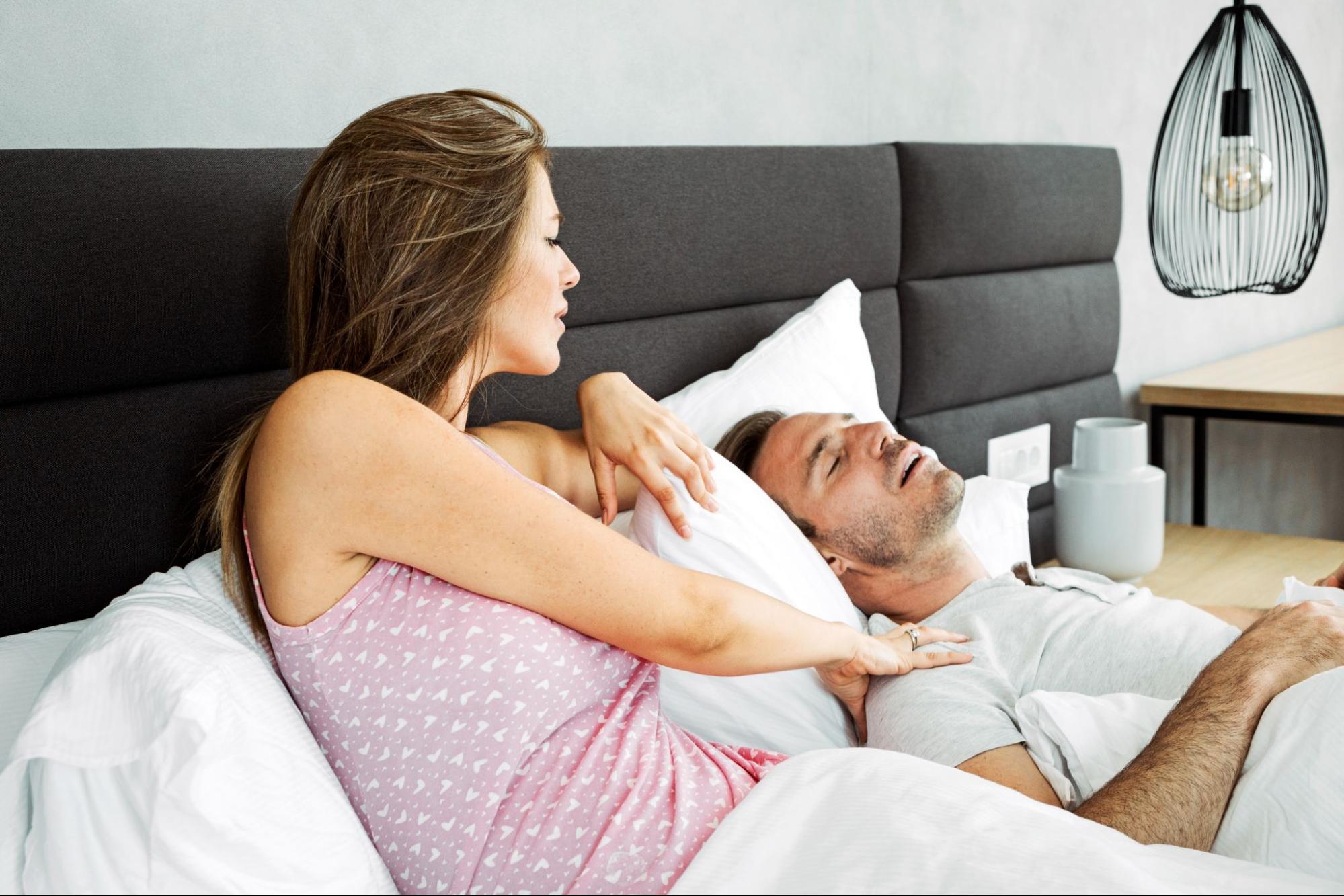
Trouble sleeping isn’t always about stress or screen time. Sometimes, the shape of your jaw, the width of your palate, or the position of your teeth is quietly blocking your airway at night. If that sounds surprising, you’re not alone. Here’s how orthodontics fits into the sleep conversation.
What Is the Connection Between Orthodontics and Sleep Issues?
Yes, orthodontics can help with sleep issues when the root cause is structural. Jaw alignment, tooth position, and palate width directly affect how open your airway stays while you sleep. When those structures are narrow, crowded, or set back, breathing becomes harder, and sleep suffers. At Lifetime Orthodontics, Dr. Wesley evaluates these connections as part of a complete airway and bite assessment.
Several sleep-related conditions are tied to oral and facial structure:
- Obstructive sleep apnea (OSA): pauses in breathing caused by a collapsing airway
- Snoring: turbulent airflow through a restricted passage
- Mouth breathing: often linked to a narrow upper arch or nasal blockage
- Bruxism: nighttime teeth grinding, sometimes tied to airway strain
According to the American Academy of Sleep Medicine, obstructive sleep apnea affects more than 25 million adults in the United States, and anatomical airway obstruction is a leading contributor. That’s why orthodontics is increasingly viewed as a complement, or in milder cases an alternative, to CPAP therapy.
One important note: not every sleep problem is orthodontic. But structural causes are often overlooked, and a thorough evaluation can reveal whether your bite and airway are part of the picture.
How Orthodontic Treatment Improves Sleep and Breathing
Orthodontics improves sleep by physically opening the airway. When Dr. Wesley widens a narrow arch, repositions the jaw, or corrects a deep bite, the tongue gets more room and the airway stays more open at night. The result is quieter, deeper, more restorative sleep.
Here’s how the process typically works:
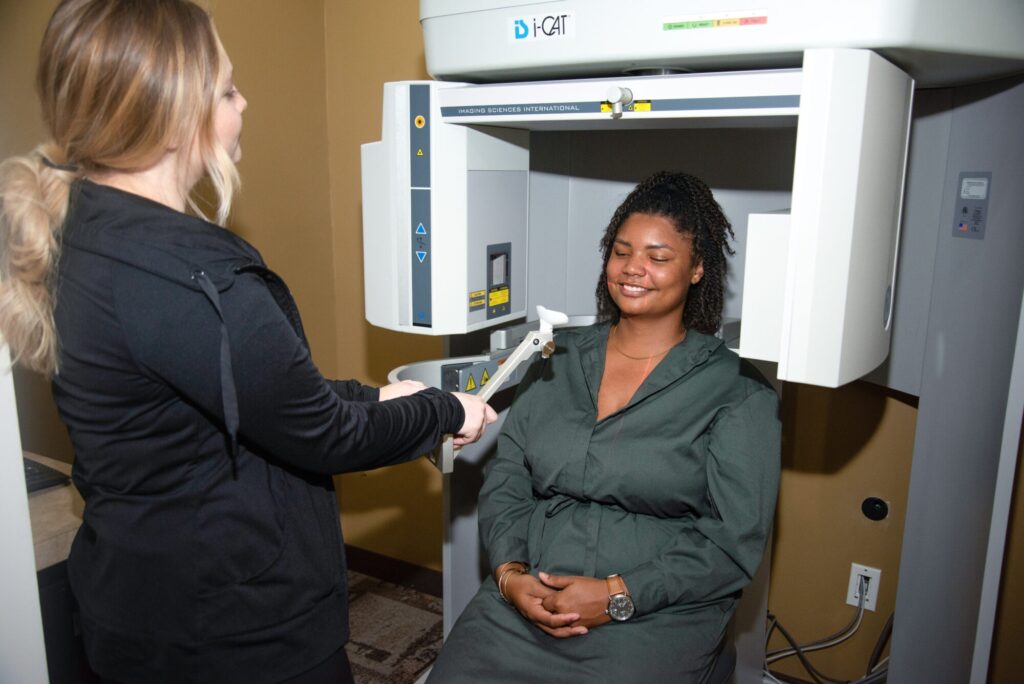
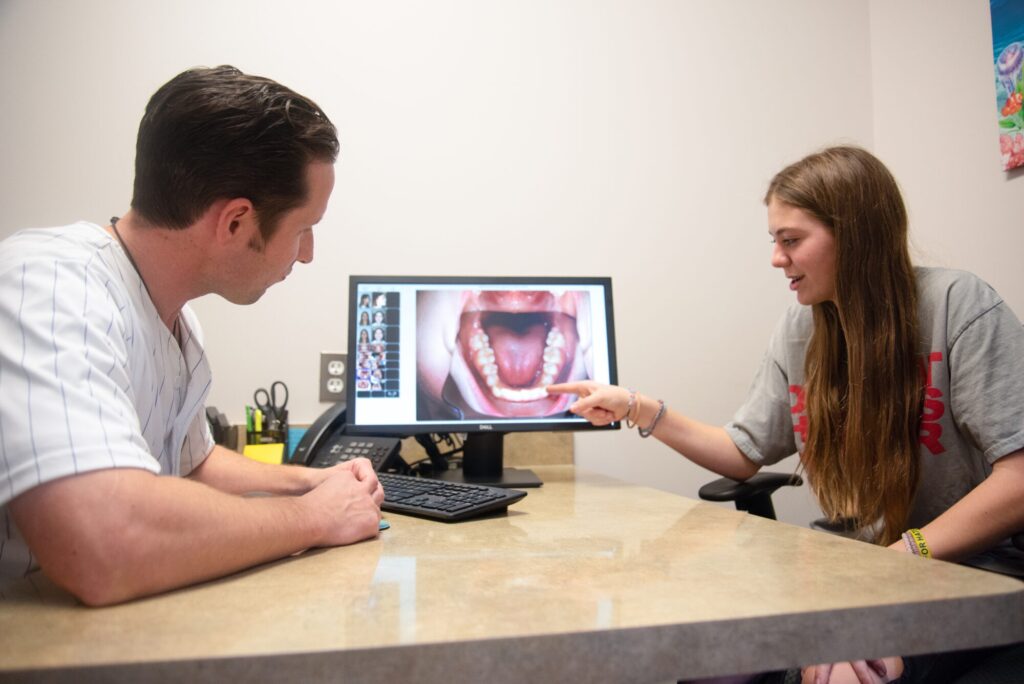
- Complete airway and bite evaluation. Dr. Wesley reviews imaging, assesses jaw position, examines arch width, and takes a thorough sleep history. This step identifies whether your sleep issues have a structural component.
- Coordination with a sleep physician or ENT. If sleep apnea is suspected, Dr. Wesley works alongside your medical team. A sleep study confirms the diagnosis and guides treatment.
- Targeted orthodontic correction. Treatment is designed around the specific airway concern, whether that’s a narrow palate, a recessed lower jaw, or crowded teeth that push the tongue backward.
- Follow-up airway reassessment. Progress is tracked through the treatment, with input from sleep specialists when needed.
The mechanisms are straightforward. A wider upper arch gives the tongue more space, which keeps it from falling backward during sleep. A forward-positioned lower jaw enlarges the airway behind the tongue. Correcting a deep bite can relieve pressure on the jaw joint and improve how the mouth rests at night.
Dr. Wesley and our Lifetime Orthodontics team may use several appliance options depending on the case:
- Palatal expanders to widen narrow upper arches, especially in growing children
- Clear braces or metal braces to correct bite and alignment issues contributing to airway restriction
- Invisalign clear aligners for adults and teens whose crowding or bite problems affect breathing
- Mandibular advancement devices (MADs) worn at night to hold the lower jaw forward
In severe cases where skeletal structure is the main driver, orthognathic (jaw) surgery combined with orthodontics may offer a permanent airway enlargement.
Benefits of Orthodontic Treatment for Sleep Problems
The benefits of orthodontic sleep treatment reach far beyond a better night’s rest. When your airway opens, your whole body feels the difference. Energy returns. Focus sharpens. Long-term health risks drop. And you often get a straighter, healthier bite as part of the deal.
Key benefits include:
- Expanded airway and improved nighttime airflow. Wider arches and better jaw position allow air to move freely.
- Reduced snoring and fewer apnea episodes. Many patients and their partners notice quieter, calmer sleep within months.
- Better sleep quality. Deeper, more continuous sleep leads to improved daytime energy, mood, and concentration.
- Lower long-term health risks. Untreated sleep apnea is linked to hypertension, heart disease, stroke, and type 2 diabetes. Addressing the structural cause helps reduce that risk.
- Reduced CPAP dependence in mild-to-moderate cases. Some patients reduce or eliminate their need for CPAP after orthodontic treatment, though severe cases still require medical therapy.
- TMJ relief. Correcting bite alignment often eases jaw joint discomfort and tension.
- Easier chewing and better oral hygiene. Straighter teeth are easier to clean and function more comfortably.
- Less bruxism. When the airway opens, nighttime grinding often decreases.
- Improved facial balance. Jaw and arch corrections support healthier long-term facial development, especially in children.
For kids, the benefits can be even more significant. Early orthodontic intervention can guide jaw growth, preventing airway problems from developing in adulthood. Children who sleep better also show improvements in behavior, school performance, and overall growth.
For adults, the gains are often felt within weeks. Mornings get easier. Afternoons stop dragging. And for many, it’s the first real stretch of good sleep in years.
Orthodontic Sleep Treatment vs. CPAP and Other Options
Choosing the right sleep treatment depends on the cause and severity of your sleep issue. Each option works differently, and many patients benefit from a combination. Here’s how the main approaches compare:
| Treatment | How It Works | Best For | Comfort | Permanence | Maintenance |
|---|---|---|---|---|---|
| Orthodontics | Corrects jaw, arch, and bite to enlarge airway | Growing patients, structural causes, mild-to-moderate OSA | Comfortable once adjusted | Permanent structural change | Retainer wear after treatment |
| CPAP | Delivers pressurized air through a mask | Moderate-to-severe OSA | Variable; compliance can be low | Only while worn | Nightly use, mask and filter care |
| Oral Appliance (MAD) | Holds lower jaw forward at night | Mild-to-moderate OSA, snoring | Generally well-tolerated | Only while worn | Nightly wear, periodic adjustments |
| Jaw Surgery | Surgically repositions upper and lower jaw | Severe skeletal cases | Significant recovery period | Permanent | Follow-up ortho and monitoring |
A few things worth knowing:
- Orthodontics addresses the root structural cause. For patients whose airway narrows because of anatomy, correcting that anatomy offers lasting change.
- CPAP remains the gold standard for moderate-to-severe OSA. It’s highly effective, but only works when worn consistently.
- MADs are a solid option for mild cases and snoring. They’re less invasive but require nightly use indefinitely.
- Combination therapy is common. Many patients use orthodontics alongside sleep medicine, especially when both structural and medical factors contribute.
Dr. Wesley works closely with sleep physicians to make sure your plan fits your diagnosis, lifestyle, and long-term goals.
Who Is a Candidate for Orthodontic Sleep Treatment?
Not everyone with sleep troubles needs orthodontics, but many people with structural airway issues are strong candidates. Dr. Wesley, a board-certified orthodontist, evaluates both children and adults to identify who will benefit most.
You may be a candidate if you notice:
- Frequent snoring or witnessed pauses in breathing during sleep
- Mouth breathing at night or during the day
- Daytime fatigue despite getting enough hours of sleep
- Morning headaches or a dry, sore throat upon waking
- Teeth grinding or jaw soreness in the morning
- Restless or fragmented sleep that doesn’t feel refreshing
- A narrow palate, recessed jaw, crowding, or malocclusion identified by a dentist or orthodontist
Children ages 7 to 10 often benefit most from early intervention, since jaw growth is still active. The American Association of Orthodontists recommends an orthodontic evaluation by age 7, which allows Dr. Wesley to spot airway and growth concerns early.
Orthodontics isn’t the right fit for every case. When sleep issues stem primarily from obesity, nasal obstruction, allergies, or non-structural causes, other therapies take priority. A coordinated evaluation with a sleep physician is essential whenever apnea is suspected, so your treatment plan addresses both the medical and structural pieces of the puzzle.
Frequently Asked Questions
Can braces cure sleep apnea?
Braces can significantly improve sleep apnea when the cause is structural, such as a narrow arch or misaligned bite. In mild-to-moderate cases, patients often see major improvement. Severe OSA usually requires a combined approach with sleep medicine, and a full cure depends on the underlying anatomy and diagnosis.
How long before I see sleep improvement after orthodontic treatment?
Many patients notice better sleep within a few months of starting treatment, especially after palatal expansion or jaw repositioning begins to open the airway. Full results typically develop over the course of treatment, which usually runs 12 to 24 months depending on the case.
Will I still need my CPAP after orthodontic treatment?
It depends on the severity of your sleep apnea. Patients with mild-to-moderate OSA often reduce or eliminate CPAP use after structural correction. Those with severe OSA frequently still need CPAP, though many report lower pressure settings and more comfortable use. Your sleep physician will guide that decision.
Can Invisalign help with snoring?
Yes, Invisalign can help with snoring when the snoring is caused by bite alignment or crowding that affects tongue position and airway space. Invisalign isn’t a direct snoring appliance, but correcting the underlying bite often improves airflow at night.
What age is best for orthodontic sleep intervention in children?
The American Association of Orthodontists recommends an orthodontic evaluation by age 7. Ages 7 to 10 are often ideal for treatment, since jaw growth is still active and palatal expanders can widen the upper arch effectively. Early intervention can prevent airway problems from developing into adulthood.
Can orthodontics help with restless or fragmented sleep?
Yes, when restless sleep is caused by airway restriction, orthodontic treatment that opens the airway often leads to deeper, more continuous rest. If your sleep feels broken despite enough hours in bed, a structural evaluation is worth considering.
Better sleep often starts with a better airway, and a better airway often starts with the right orthodontic plan. If snoring, fatigue, or disrupted sleep sounds familiar, Dr. Wesley and our Lifetime Orthodontics team are here to help you understand your options. Schedule a free consult at our Clinton Township office (16560 19 Mile Rd., 586-286-5520) or our Grosse Pointe Woods office (20155 Mack Ave., 313-640-7777) to start your smile journey here.